


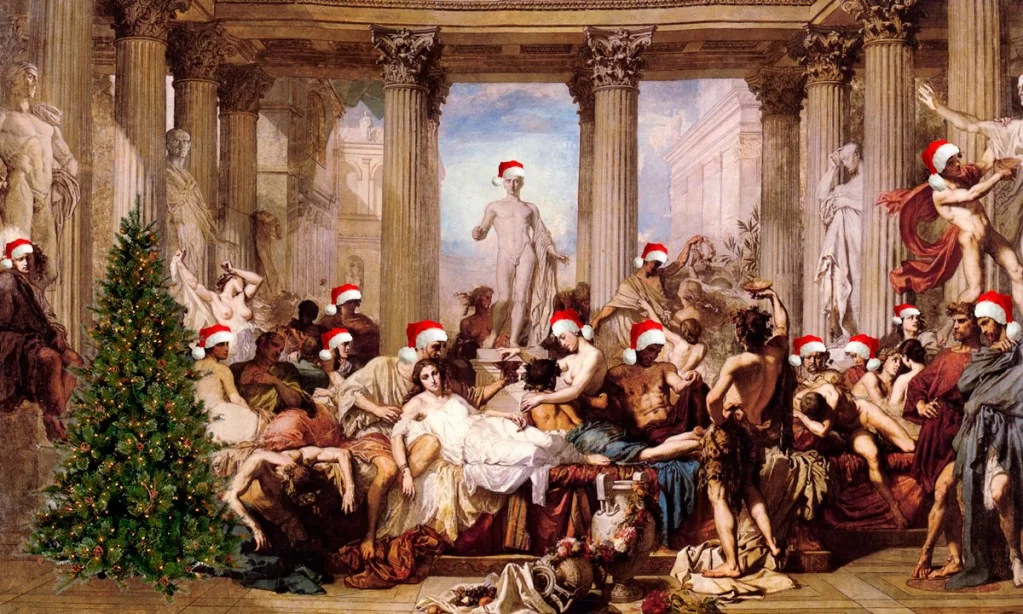
Christmas, as it is celebrated today in many parts of the world, is a holiday deeply associated with Christianity and the birth of Jesus Christ. However, its origins are much older and are closely linked to pagan traditions that existed before the spread of Christianity in Europe. These celebrations were mainly related to the cycles of nature, the winter solstice, and the hope for the rebirth of light.
Yule
In Northern Europe, the Germanic and Scandinavian peoples celebrated Yule, a festival that lasted several days and was dedicated to the rebirth of the sun. During Yule, large logs—known as Yule logs—were lit to attract good luck and ward off evil spirits. Evergreen trees, such as pine trees, were also revered, as they symbolized eternal life even in the middle of winter. From this tradition comes the modern Christmas tree.
As Christianity expanded, many of these pagan customs did not disappear but were reinterpreted. The Church understood that integrating local traditions would make the conversion of pagan peoples easier. Thus, symbols such as lights, wreaths made of green leaves, and the exchange of gifts acquired new Christian meanings, while still preserving their original essence.

The Christmas tree
It comes from Germanic and Nordic peoples, who worshipped evergreen trees as a symbol of eternal life during winter. They represented hope and the continuity of life when everything seemed dead.
Christmas wreaths
Made from green branches, they represented the eternal cycle of nature and protection against evil spirits in European pagan cultures.
Mistletoe
For the Celts and Druids, it was a sacred plant associated with fertility, protection, and peace. Hanging it in the home was believed to bring good luck.
The Yule log
In Nordic celebrations, a large log was burned to attract prosperity and drive away negative energies during winter.
Saturnalia
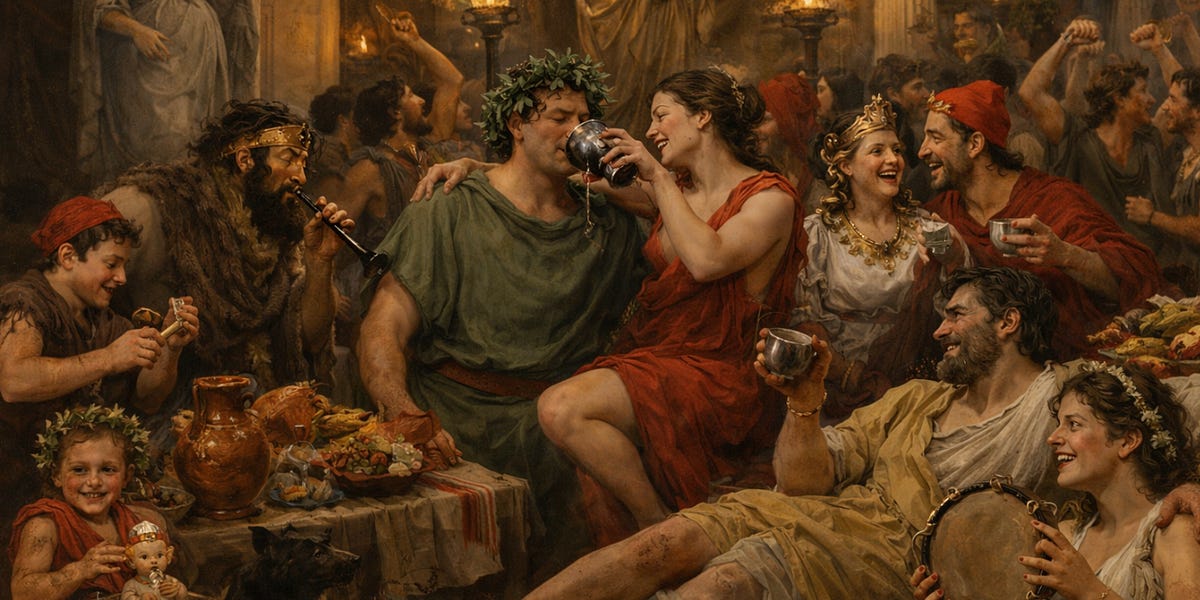
One of the most influential pagan celebrations was Saturnalia, a Roman festival dedicated to the god Saturn, celebrated between December 17 and 23. During Saturnalia, social hierarchies were suspended, slaves could sit at the table with their masters, and gifts were exchanged. Homes were also decorated with green plants and candles were lit—symbols representing life and light. Many of these elements remain today in Christmas traditions.
Another important festival was the cult of Sol Invictus, officially established in the Roman Empire in the 3rd century AD. December 25 marked the birth of the “Unconquered Sun,” a deity associated with the triumph of the sun. This date was not accidental, as it coincided with the period near the winter solstice. When Christianity began to consolidate, the Church adopted this date to celebrate the birth of Jesus, thus facilitating the transition from pagan beliefs to Christian ones.
The date of December 25
It does not appear in biblical texts. It coincides with the Roman celebration of Sol Invictus, dedicated to the birth of the unconquered sun after the winter solstice.
The exchange of gifts
This custom has its roots in Roman Saturnalia, when people gave each other objects as symbols of good wishes and social unity. Over time, it was adapted and led to the creation of the “Secret Santa” tradition.
Banquets and abundant celebrations
During festivals such as Saturnalia, large meals were held to give thanks for surviving the winter and to strengthen the community. These practices have evolved into what we now know as the Christmas dinner.
In conclusion, Christmas is the result of a complex historical and cultural process in which pagan and Christian beliefs merged. Although today it is mainly associated with the birth of Christ, many of its traditions have ancient roots linked to nature, the sun, and the hope of renewal. Understanding the pagan origins of Christmas allows us to appreciate this holiday as a universal celebration that has evolved over the centuries, adapting to different cultures and historical contexts.


What do you think?
Show comments / Leave a comment