


Introduction of Color in Psychology
Color is sensory, individual, and subjective. Therefore, color psychology is the study of the emotional effects that colors can generate in people. It considers that colors are perceived through the human sensory system, so the experience varies from person to person. In other words, there is a subjective component.
Furthermore, certain cultural codes add specific meanings and symbolism to each color. For this reason, color psychology evaluates what colors convey, taking into account both cultural and sensory influences.
Color can stimulate or depress; it can create joy or sadness. Likewise,
certain colors evoke active or, conversely, passive attitudes. With colors,
we can experience thermal sensations of cold or heat, and we can also have
impressions of order or disorder.
How color is Identified?
Color is identified with masculinity and femininity, with nature and artifice, with romance and classicism, with popularity, exclusivity, and collectivity.
Color, therefore, is not only sensation, but fundamentally and primarily emotion.
Its attributes as signifiers are appreciated not only by artists, but also by advertisers, designers, decorators, scientists, educators, politicians, and social and labor agents, etc.
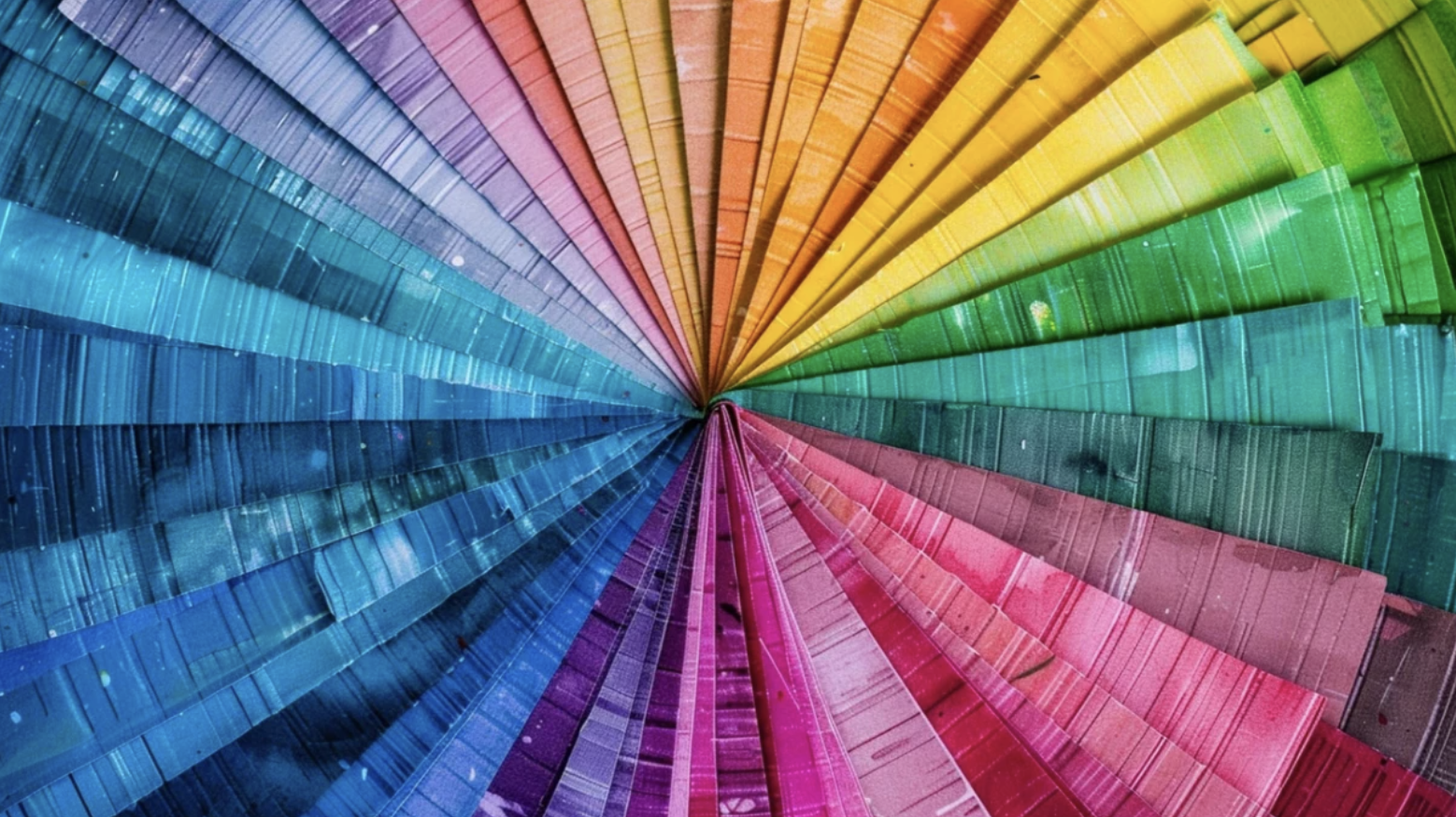
Both cool and warm colors are named according to their position on the electromagnetic spectrum. Long-wavelength colors correspond to warm colors, while cool colors originate from shorter wavelengths. The sensations perceived by the observer are related to their association with elements that determine thermal perceptions. Thus, yellows, reds, and those belonging to their families evoke the idea of the sun, heat, and fire; While blues, greens, and many
violets have similarities to freshness, depth, humidity, water, and
ice.
A color can appear cool or warm depending on the proportion of other colors in its
mixture and also on its surroundings.
Regarding the first point, it can be said that, for example, green, which
we have always referred to as cool, can also be considered warm if yellow predominates over blue in
its composition. A yellow-green is warm, and a blue-green is cool. This can be extrapolated to any other colors that come from
mixtures, even if we are talking about ranges considered in principle “achromatic.” By
definition, grays are said to be cool, but if a certain amount of blue is added,
that sensation is enhanced, while if they are given a slightly yellowish tint,
they will be perceived as warm.
Furthermore, as previously mentioned, a particular color is influenced by its neighbors, and therefore its perceived temperature is also affected.
Why do colors influence our minds and behavior?
The way colors induce us to experience certain sensations and adopt certain attitudes has two types of causes: biological, on the one hand, and cultural, on the other.
Regarding the biological aspects of this phenomenon, the psychology of color is a reality beyond the human species: in nature, color perception influences the behavior of many animals. For example, some skink reptiles scare away predators by displaying their dark blue tongues, as other species perceive this as a sign of illness. On the other hand, combinations of red and yellow are seen as a sign of danger, and many species use them as a warning (and there are even completely harmless species that adopt similar hues to try to appear intimidating).
In terms of cultural aspects, virtually all human societies associate colors with specific concepts to express abstract ideas, which is understandable given the difficulty we have in using pigments to create body paint, drawings on all kinds of surfaces, etc. Furthermore, Homo sapiens is a highly visual species with a great capacity to perceive many colors (most mammals and reptiles perceive far fewer).
Perhaps the area where color psychology is most applied is marketing. It’s common to believe that our purchasing decisions are based on rational analysis, but often, our emotions are what decide for us.
For some time, and as far as decision-making is concerned, even modern neuroscience had focused solely on the cognitive aspects of the brain, neglecting emotions. All this changed with Antonio Damasio’s book, “Descartes’ Error.” A highly recommended psychology text that provides scientific evidence on the importance of emotions in our decisions.
The psychology of color can influence audience perceptions, for example at galas. For instance, in this post Celebridades: fama, brillos y momentos ridículos we can see some celebrity outfits that are more or less eye-catching, and this is largely due to the color of the fabric and the psychology behind the color of that fabric.
So how do we reach the customer’s heart? Through the senses, primarily through hearing and sight. That’s why, when you enter a fashion store, energetic music plays and you can appreciate the decor and vibrant colors that tell you: “buy, buy, buy.” According to the Color Marketing Group, a company specializing in the use of color, almost 85% of the reasons why a person chooses one product over another are related to color perception.


What do you think?
Show comments / Leave a comment