


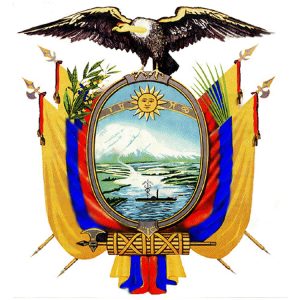
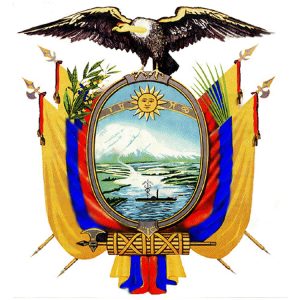
October 31st marks the celebration of the Day of the Coat of Arms, one of Ecuador’s National Symbols, officially adopted by Congress in 1900 and implemented during the presidency of General Eloy Alfaro Delgado on November 7th of the same year. A few days later, on December 5th, the decree was published in the Official Register.
The elements that make up the National Coat of Arms include: a Golden Sun, an Oval, and Zodiac Signs. It also features Mount Chimborazo, one of the highest peaks in the Andes under a blue sky, from which the Guayas River originates, symbolizing the unity among all Ecuadorians. A steamship sails along the wide part of the river, referencing the first steamship built on the Pacific coast in the shipyards of Guayaquil, symbolizing navigation and commerce.
The Coat of Arms rests on consular fasces, an emblem of republican authority composed of a bundle of rods tied with a ribbon, encircling an axe.
Four national flags surround the Coat of Arms—two mounted on lance shafts, the primary weapon used in the independence struggles, and two on halberd shafts, symbolizing the guardianship of constituted power. Between them appear two branches: one of palm (on the right), symbolizing the martyrdom of those who gave us freedom (at the time, the phrase “the palm of martyrdom” was used), and one of laurel (on the left), symbolizing triumph and glory.
Some versions of the Coat of Arms are mistakenly drawn with an olive branch instead of the palm or laurel. The official decree specifies the palm and laurel branches. At the top of the Coat of Arms stands the Andean condor, wings spread wide, symbolizing strength, grandeur, and pride.


What do you think?
Show comments / Leave a comment