


The Stroop Test, also known as the Color-Word Test, is a key tool in psycholinguistics for analyzing cognitive processing, selective attention, and the inhibition of automatic responses. This study, conducted in Quito with participants aged 16 to 45, demonstrates how the Stroop effect influences individuals’ ability to process conflicting stimuli.
What is the Stroop Effect?
The Stroop effect refers to the cognitive interference that occurs when the meaning of a word and its printed color do not match. This phenomenon reveals how the brain prioritizes automated reading over color identification, causing errors and slowing verbal responses.
Stroop Test Phases
- Word Phase: Reading words printed in black ink. Participants show high performance due to the automation of reading.
- Color Phase: Identifying colors in symbols. Performance decreases because naming colors requires greater cognitive effort.
- Word-Color Phase: Reading words with incongruent colors. This phase is the most challenging, clearly demonstrating the Stroop effect.
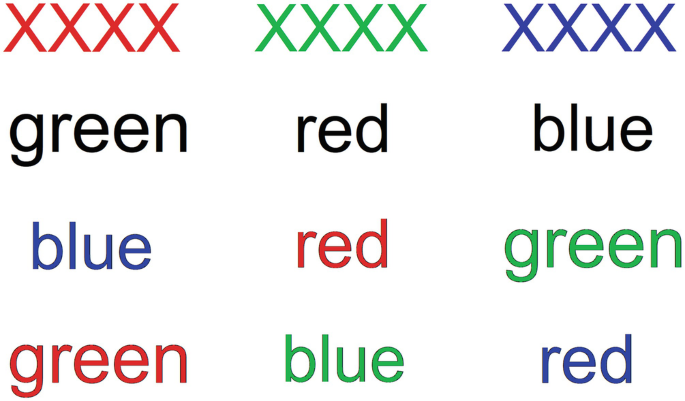
Results and Analysis
Data show that all participants, regardless of age or gender, experienced the Stroop effect. Neuropsychological evaluation confirms that interference impacts performance in visual and verbal processing tasks. Previous studies in Colombia and Spain support these findings, validating the test’s psychometric properties.
Applications in Language Neuroscience
This test is useful not only in clinical psychology but also in language neuroscience, bilingualism, and speech disorders. Its ability to measure cognitive flexibility and verbal fluency makes it a valuable tool for linguistic and cognitive research.
Conclusion
The Stroop Test is effective for evaluating word processing, cognitive interference, and selective attention in literate individuals. Its application can extend beyond psychology, adding value in fields such as linguistics, education, and neuroscience.


What do you think?
Show comments / Leave a comment